
Survival food · emergency food kits · long-term storage
Build a Survival Food Supply That Fits Your Household
Prepare for power outages, storms and supply disruptions with a food reserve you can count, store and actually eat. Compare 72-hour, 4-week and 3-month food kits—then calculate how much food your family still needs.
Food-kit “days” and “servings” are not interchangeable. Check total calories, meal variety, water needs and dietary requirements.

Featured survival food shopping choices
Shop 72-Hour, 30-Day & 90-Day Food Options
Start with the coverage you need, then compare real food photos, calories and kit contents. Four-week kits cover 28 days, so add food if your goal is 30. Prices and inventory may change.
72-Hour Emergency Food Kits
A practical first purchase or an addition to pantry food. Look for meals that work without refrigeration, with a low-water preparation option when possible.
Browse Ready Hour Starter KitsHow to plan a 72-hour food reserve →
30-Day Emergency Food Plan
Compare four-week kits and supplement them as needed: 4 weeks is 28 days, not 30. Check the total calories, servings, and number of people covered before buying.
Explore Ready Hour 4-Week KitsCompare food kit costs →
90-Day Emergency Food Supply
Compare the calorie totals and included meals from Ready Hour and 4Patriots. Don't assume every three-month package contains the same amount of energy.
Shop My Patriot Supply 3-Month FoodRead the 90-day food guide →Affiliate disclosure: SurvivalOP may receive a commission from qualifying purchases made through merchant links at no extra cost to you. This site is an independent comparison resource, not the manufacturer. Always review the current merchant checkout page.
See actual meal photos
What Does Survival Food Actually Look Like?
Not just buckets and sealed pouches. These are manufacturer photographs of prepared emergency meals and food products. Exact recipes and quantities depend on the kit purchased.

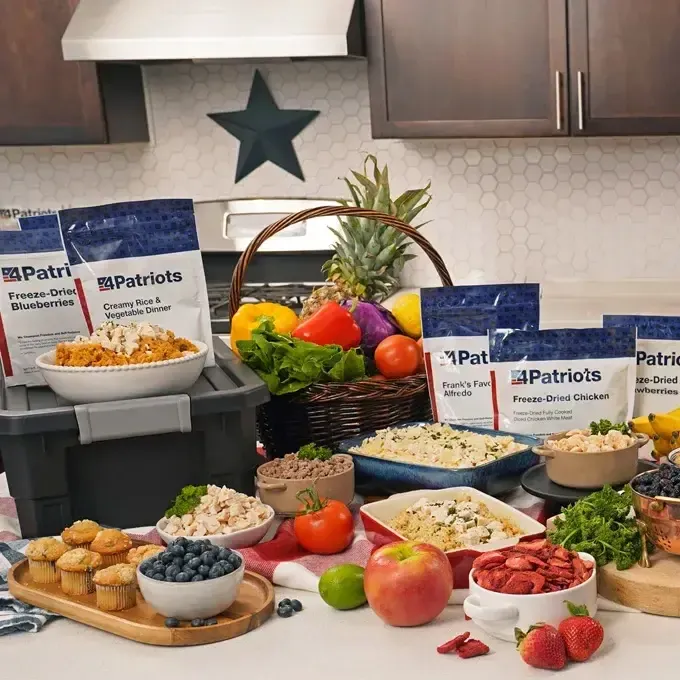
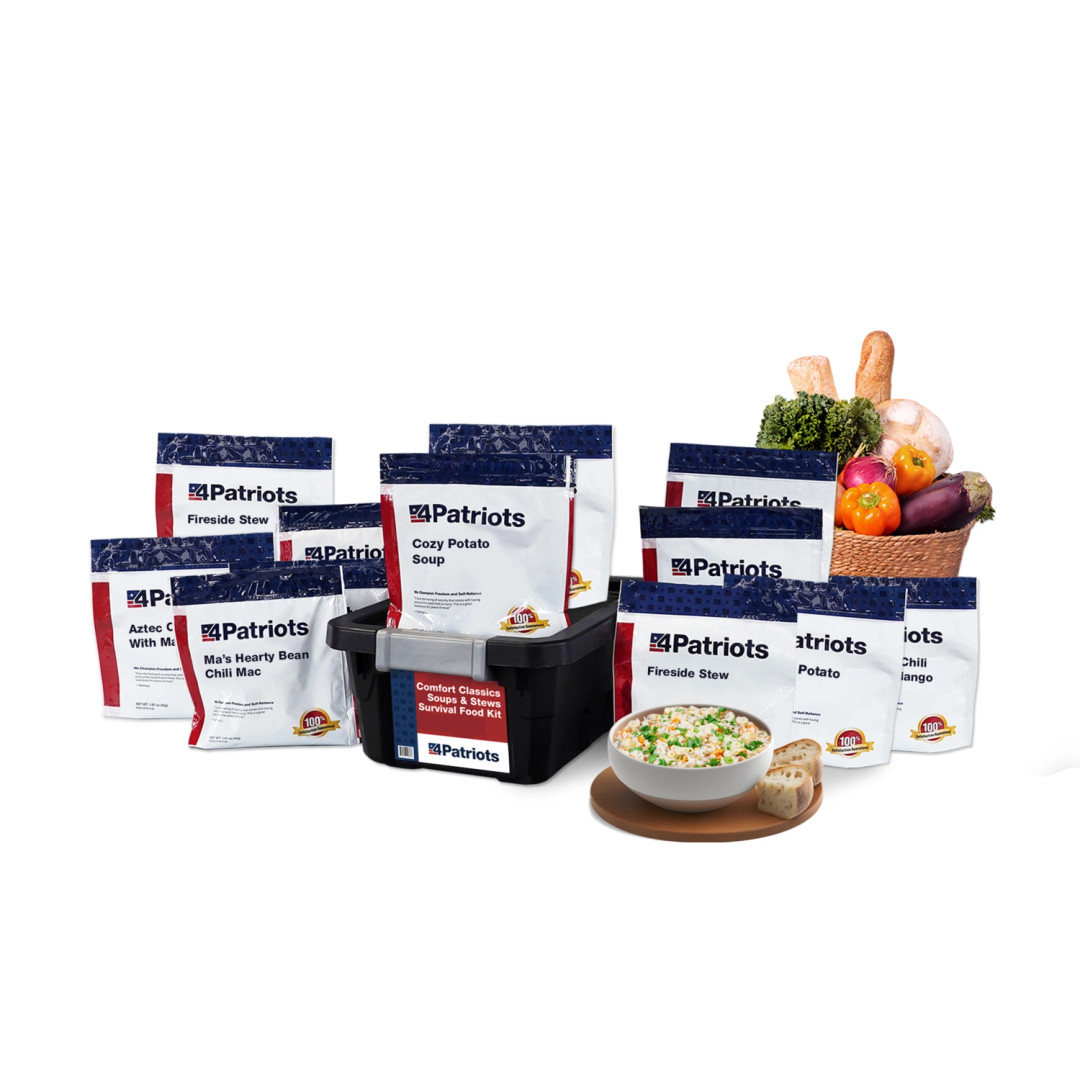
Photos supplied by the respective manufacturers. Some images are styled product presentations; compare ingredient labels, nutrition and current kit contents before purchasing.
The essentials before the extras
How Much Emergency Food Should You Store?
Start with foods your household already eats, then expand your reserve. These are planning milestones, not universal prescriptions.
Immediate disruption
Prioritize ready-to-eat, nonperishable food that needs little or no water and no electricity.
Household buffer
Extend pantry staples and shelf-stable meals. Account for dietary restrictions and children.
Extended outage
Mix rotating groceries, canned food and packaged emergency meals. Plan safe cooking.
Long-term reserve
Calculate total calories, preparation water, storage space and replenishment needs.
For basic preparedness, Ready.gov recommends a minimum three-day supply of nonperishable food. Building beyond that can be a personal household goal.
Free interactive planning tool
Survival Food Calculator
Estimate a total calorie target for the people and days you choose. Enter the calories already in your emergency reserve to see a gap estimate.
Calculate Your Food Reserve
2,000 is only an illustrative starting assumption. Individual needs vary with age, health, activity and other factors.
112,000 more calories needed for this example goal.
4 people × 14 days × 2,000 calories.
Why Counting Servings Can Mislead
A kit labeled “90 days” doesn't automatically supply your household's full calorie requirements for 90 days. The only useful comparison is the total calories in the kit versus your planned calorie target.
- Choose a realistic food-coverage duration and calorie target for each person.
- Add up the calories in your shelf-stable groceries and food kits—avoid counting the same food twice.
- Check protein, nutrients, sodium, allergens and whether your family will eat the included meals.
- Confirm safe potable water and a suitable fuel source for meals requiring cooking.
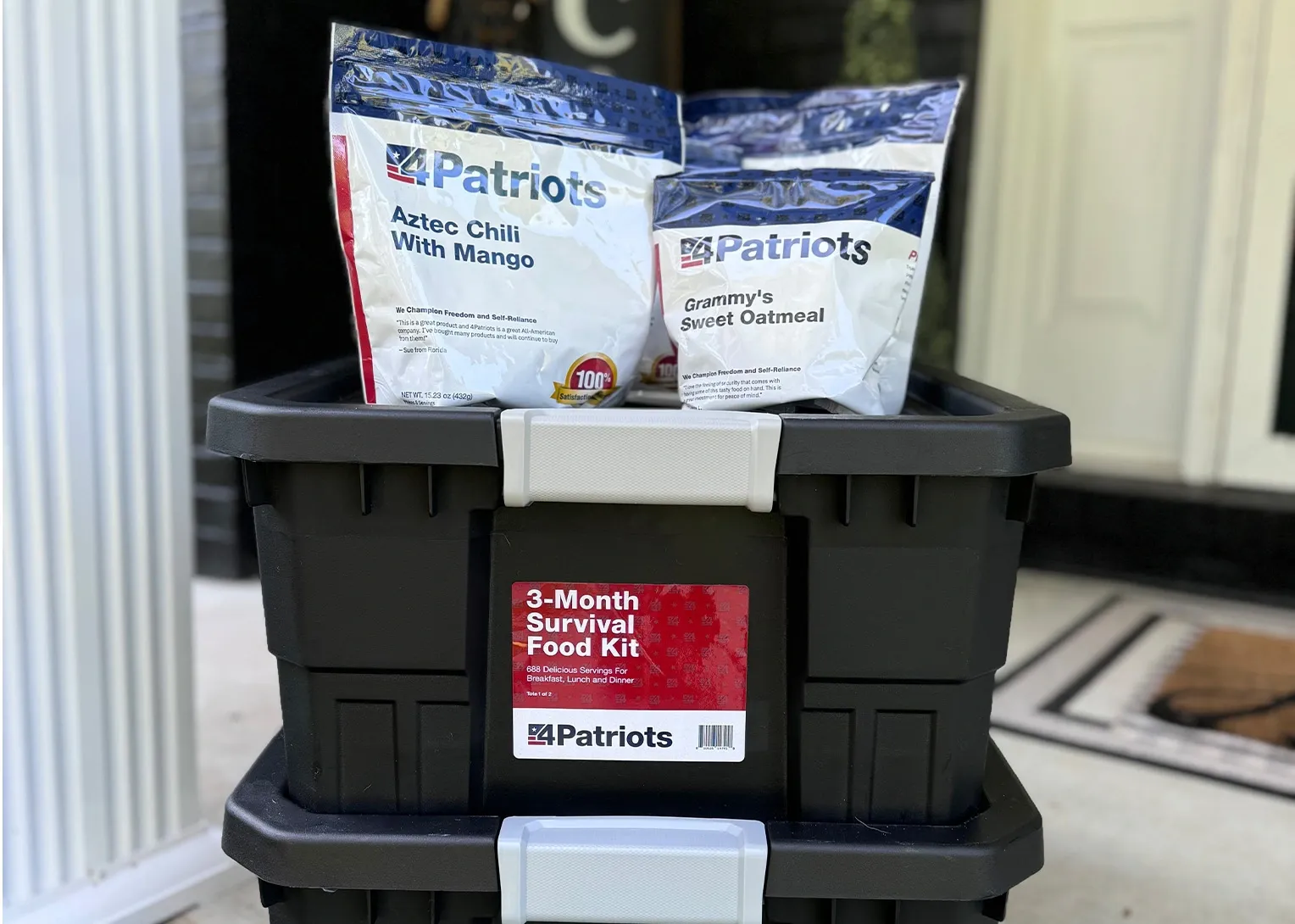
Example: The 4Patriots 3-month kit currently lists 139,600 calories. At an illustrative 2,000 calories per day, that represents about 70 person-days of calories—not 90 complete 2,000-calorie days. You may need supplemental food.
Two distinct affiliate offers
My Patriot Supply vs. 4Patriots
Both sell long-term emergency food, but their food kits have different calorie totals, meal combinations and fulfillment terms. Compare the actual kit—not just the duration on the label.
My Patriot Supply
- Emergency-food collection includes a 72-hour sample kit and multiweek food supplies.
- Ready Hour currently lists 4-week and 3-month options with 2,000+ calories per day.
- Review current inventory, price, dietary details and cooking-water requirements at the merchant.
4Patriots
- The 3-month kit currently lists 139,600 calories across 90 days for one person (about 1,551 calories/day).
- The manufacturer describes a shelf life of up to 25 years when properly stored; check conditions.
- The tracked affiliate offer supplied to SurvivalOP is for a 3-month food kit; confirm current offer terms at checkout.
Compare like with like. One manufacturer's 90-day label is not a guarantee of meeting every adult's full energy needs. Calculate calorie coverage and account for personal nutrition requirements before ordering. Availability and campaign terms should be confirmed on the merchant page.
More than buying a bucket
Build an Emergency Food System You Can Maintain
Packaged survival food can help—but a resilient reserve also needs ordinary groceries, safe storage, water and a rotation plan.
1. Build a Rotating Pantry
Stock shelf-stable foods your household already eats, such as canned beans, fish, vegetables, peanut butter, oats and ready-to-eat items. Rotate older items into regular meals.
2. Store Properly
Keep food sealed and protected from heat, moisture, pests and package damage. Follow each manufacturer's storage instructions and check dates regularly.
3. Plan Water & Cooking
Freeze-dried meals often require potable water and a way to heat it. Keep some foods that are edible without cooking in case fuel, electricity or clean water is limited.
4. Plan for Real Dietary Needs
Account for children, allergies, medical diets, medications, pets, and household activity levels. Vary foods rather than depending entirely on one meal type.
SurvivalOP food library
Survival Food Buying Guides & Storage Tips
Read practical explanations before spending money on products you may store for years.
Emergency Food Supply
Build your reserve →Planning from a 72-hour buffer to three months.
Best Survival Food Kits
Compare kit options →What to compare beyond shelf-life and servings.
How Long Emergency Food Lasts
Understand shelf life →Storage conditions and long-term food choices.
Cheapest Survival Food Kits
Compare value →Evaluate cost, calories and usefulness together.
Emergency Food for Long-Term Storage
Plan storage →Packaging, storage space, water and rotation.
How Long Will Food Last Without Power?
Learn food safety →Refrigerator and freezer safety when the power fails.
Don't Rely on Perishable Food During a Blackout
According to CDC food-safety guidance, an unopened refrigerator generally maintains safe temperatures for about four hours. A full freezer can maintain safe temperatures for around 48 hours if it remains closed; a half-full freezer, around 24 hours. Always follow official food-safety advice and discard unsafe perishables.
Read SurvivalOP’s food safety guide → | CDC: Keep food safe after an emergency
Support your food plan
Water, Power & Preparedness Tools
Food is the main focus. These resources help you safely prepare it and respond to household disruptions.
Safe Water Storage
Plan drinking and meal-preparation water before you depend on dry foods.
Build a household list →Backup Cooking & Power
Plan for lights, communications and safe cooking when electricity is unavailable.
See outage preparedness →Live Threat Scanner
Use online alerts as one information source; keep offline alert options too.
Open threat scanner →