How Long Will Food Last Without Power?
A closed refrigerator generally protects food for about four hours. A full freezer can hold temperature for about 48 hours, while a half-full freezer lasts about 24 hours. Use this guide to decide what may be saved, refrozen or discarded.
The Four Numbers to Remember
When the door stays closed.
When unopened and completely full.
When unopened and about half full.
Use time and temperature—not smell or taste.
In This Guide
How Long Does Food Stay Safe Without Electricity?
The clock begins when the power goes out, but actual safety depends on whether the appliance stayed closed and whether the food remained at a safe temperature.
Refrigerator: Food generally remains safe for up to four hours when the door stays closed. After four hours, discard refrigerated perishable food unless it was transferred to ice or another cold source and remained at 40°F or below.
Full freezer: Food generally stays cold for about 48 hours when the freezer remains unopened.
Half-full freezer: Food generally stays cold for about 24 hours when the freezer remains unopened.
Frozen food after thawing: Food may generally be refrozen when it still contains ice crystals or measures 40°F or below, although quality may decline. Ice cream and frozen yogurt are notable exceptions and should be discarded when thawed.
Power Outage Food Safety Calculator
Use this screening tool to identify the correct next step. It cannot measure the food’s actual temperature and does not replace the official item-by-item chart.
Check Your Refrigerator or Freezer
Enter the outage duration and the appliance conditions. Use an appliance or food thermometer whenever one is available.
What to Do as Soon as the Power Goes Out
The first few decisions determine how long the cold air remains inside the appliances.
Keep Doors Closed
Do not repeatedly check food. Make a written inventory before storm season so you know what is inside without opening the door.
Record the Time
Write down when the outage began. Do not rely on memory during a long storm or overnight outage.
Check Thermometers
Use appliance thermometers in both units. Avoid opening the door merely to look unless the display is visible externally.
Prepare Coolers
When the outage is expected to exceed four hours, prepare coolers with ice or frozen gel packs for priority refrigerated food.
Group Frozen Food
Frozen items help keep one another cold. Avoid spreading them out or moving them unnecessarily.
Eat Shelf-Stable Food
Use your emergency food supply instead of opening the refrigerator for every meal.
Refrigerator Food: What to Keep and What to Throw Away
After more than four hours without power, use temperature records and the official food chart. The summary below covers common household items.
| Food Category | After More Than 4 Hours Without Safe Cooling | Why |
|---|---|---|
| Raw or cooked meat, poultry and seafood | Discard | Perishable and capable of supporting rapid bacterial growth. |
| Lunch meat, hot dogs, bacon and sausage | Discard | Refrigerated processed meats remain perishable. |
| Milk, cream, yogurt and sour cream | Discard | Temperature-sensitive dairy products. |
| Soft, shredded and low-fat cheese | Discard | Higher moisture increases risk. |
| Hard cheeses such as cheddar, Swiss and Parmesan | Often keep | Lower moisture makes many hard cheeses more stable; follow the official chart and product instructions. |
| Eggs, egg dishes and egg substitutes | Discard | Temperature-sensitive and highly perishable. |
| Casseroles, soups, stews and leftovers | Discard | Cooked mixed dishes should not be kept after unsafe warming. |
| Cooked rice, pasta and potatoes | Discard | Cooked starches can support dangerous bacterial growth. |
| Cut melons, cut tomatoes and cut leafy greens | Discard | Cut produce requires refrigeration. |
| Uncut fresh fruits and vegetables | Usually keep | Whole, uncut produce is generally less temperature-sensitive. |
| Butter and margarine | Usually keep | Listed as keep items in federal outage guidance. |
| Peanut butter, jelly, mustard, ketchup and pickles | Usually keep | Many high-acid, high-sugar or shelf-stable condiments remain safe; check labels and the official chart. |
| Opened mayonnaise, tartar sauce and creamy dressing | Temperature dependent | Discard when held above 50°F for more than eight hours; consult the official chart rather than guessing. |
| Bread, rolls, muffins and cakes without cream filling | Usually keep | Most plain baked goods do not require cold holding. |
| Cream-filled pastries, cheesecake and refrigerated pies | Discard | Contain temperature-sensitive dairy or egg ingredients. |
Frozen Food: Refreeze, Cook or Discard?
The outage duration is only a guide. Ice crystals and measured temperature determine whether many frozen foods may be refrozen.
| Condition | Action | Important Notes |
|---|---|---|
| Food still contains ice crystals | Refreeze or cook | Quality and texture may decline, but federal guidance generally permits refreezing. |
| Food is completely thawed but measures 40°F or below | Usually refreeze or cook | Evaluate each item with the official chart. Quality loss is likely. |
| Perishable food has been above 40°F for more than 2 hours | Discard | Use one hour when the ambient temperature is above 90°F. |
| Ice cream or frozen yogurt has thawed | Discard | Federal guidance advises discarding rather than refreezing. |
| Hard cheese remains cold | Refreeze | Some quality change may occur. |
| Frozen meat, poultry or seafood remains icy or 40°F or below | Refreeze or cook | Cook promptly when choosing not to refreeze. |
| Temperature and time are unknown | Discard questionable perishables | Do not use taste or smell as a safety test. |
Why a Full Freezer Lasts Longer
Frozen packages act as thermal mass. A tightly packed freezer loses temperature more slowly than a half-empty one. Before predictable severe weather, freeze containers of water and fill unused space without blocking necessary airflow.
Do Not Put Food Outside in Winter
Outdoor temperatures can fluctuate, sunlight can warm containers, animals can contaminate food and frozen items can begin thawing even when snow remains on the ground. Use a controlled cooler or appliance with a thermometer instead.
Using Ice, Coolers and Dry Ice
Cold sources can extend the safe window, but the food still must remain at 40°F or below.
Use Separate Coolers
Keep beverages in a different cooler so the food cooler remains closed.
Fill Empty Space
Use ice, frozen gel packs or frozen water bottles. A full cooler maintains temperature better than an empty one.
Add a Thermometer
Place an appliance thermometer inside the cooler. The presence of ice alone does not confirm every food is safe.
Protect Food From Meltwater
Use sealed containers or waterproof bags to prevent cross-contamination.
Handle Dry Ice Carefully
Wear insulated gloves, allow ventilation and never seal dry ice in an airtight container.
Buy Ice Before the Rush
Block ice, dry ice and gel packs may become difficult to find after a major outage begins.
What to Do When the Power Comes Back On
Do not assume every item is safe simply because the refrigerator starts cooling again.
- Record the total outage duration.
- Read the appliance thermometer before temperatures change.
- Check frozen food for ice crystals and use a food thermometer where appropriate.
- Separate foods into keep, use promptly and discard groups.
- Photograph discarded food when insurance or disaster-assistance documentation may be useful.
- Clean spills and leaking packages before restocking.
- Allow appliances to return to safe operating temperatures.
Can Food Be Refrozen?
Many frozen foods may be refrozen when ice crystals remain or the food is 40°F or below. Refreezing can reduce texture, flavor and moisture quality. Consult the official frozen-food chart for the specific item.
What About Medicine Stored in the Refrigerator?
Food guidance does not determine medication safety. Follow the medication label, manufacturer, pharmacist or healthcare professional. Do not discard or use temperature-sensitive medication based only on the food timeline.
Power Outage Food Safety Mistakes
Trusting Smell
Dangerous bacteria may be present even when food smells and looks normal.
Opening the Door Repeatedly
Every inspection releases cold air and shortens the safe window.
Using Snow as a Refrigerator
Outdoor temperatures and contamination cannot be controlled reliably.
Cooking Spoiled Food
Cooking does not reliably make every temperature-abused food safe because some toxins can remain.
Guessing the Outage Time
Record the start time and use utility notifications when the outage began while you were away.
Owning No Thermometers
Inexpensive appliance and food thermometers turn an uncertain decision into a measured one.
Power Outage Food Safety Checklist
Prepare the appliances and cold-storage supplies before the next outage.
Build a Food-Safe Blackout Kit
Cold storage is only one part of the plan. Add shelf-stable meals, thermometers, coolers, lighting and a printed preparedness reference.
SurvivalOP™ Survival Guide
Keep a compact preparedness reference available when the internet and power are unavailable.
View the Survival GuideEmergency Food Supplies
Build a shelf-stable food reserve that does not depend entirely on refrigeration or cooking.
Explore Emergency FoodMore Survival Books
Browse emergency food storage, outage planning and self-reliance references.
Browse Survival BooksAffiliate disclosure: SurvivalOP may earn a commission from qualifying purchases at no additional cost to you.
Power Outage Food Safety FAQ
How long does refrigerator food last without power?
A closed refrigerator generally keeps food safe for up to four hours. After that, discard refrigerated perishable food unless it remained at 40°F or below in the refrigerator, a cooler or another controlled cold source.
How long does frozen food last during a blackout?
A full unopened freezer generally holds temperature for about 48 hours. A half-full unopened freezer generally holds temperature for about 24 hours.
Can I refreeze food after a power outage?
Many foods may be refrozen if they still contain ice crystals or measure 40°F or below. Consult the official item-specific chart because exceptions apply and quality may decline.
Should I throw away everything after four hours?
No. The four-hour rule applies primarily to refrigerated perishable food when safe cold holding was lost. Butter, many condiments, hard cheese, uncut produce and other items may be kept according to the official chart.
Can I tell whether food is safe by smelling it?
No. Food can contain dangerous bacteria without smelling, looking or tasting spoiled. Never taste food to test its safety.
Is food safe if the refrigerator temperature is 40°F?
Food held continuously at 40°F or below is generally within safe cold-holding temperature. Evaluate the thermometer’s accuracy, outage duration and each food item using official guidance.
Can I put refrigerated food outside during a winter outage?
FoodSafety.gov advises against using outdoor winter weather as an informal refrigerator because temperatures fluctuate and food can be exposed to sunlight, animals and contamination.
Does cooking make unsafe food safe again?
Not reliably. Some organisms can create toxins that remain after cooking, so temperature-abused perishable food should be discarded rather than rescued through heating.
Protect the Cold, Measure the Temperature and Avoid Guessing
Keep refrigerator and freezer doors closed, record the outage time and use thermometers whenever possible. Remember the basic 4-48-24 timeline, but make final decisions using the food’s actual temperature and the official item-by-item chart.
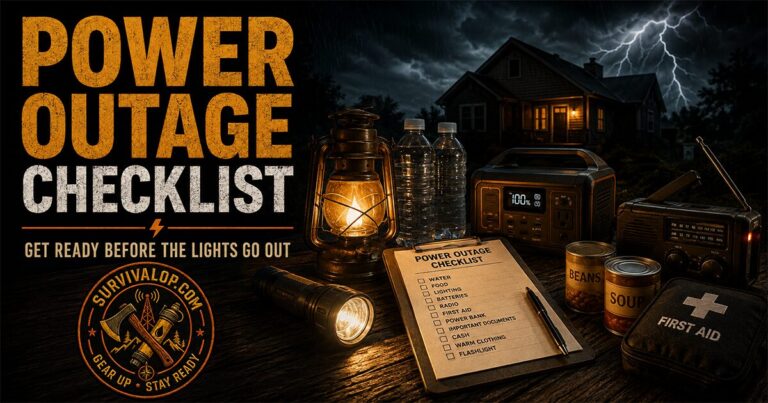
Complete the rest of your system with the power outage kit, preparedness checklist and no-electricity cooking guide.
Share This Food Safety Guide
Help another household remember the 4-hour refrigerator and 48/24-hour freezer timelines.