How to Heat a House Without Electricity Safely
Keep your household warmer during a winter power outage by concentrating heat, blocking drafts, dressing in layers and using only properly installed or manufacturer-approved heating equipment.
Cold-Weather Blackout Priorities
In This Guide
What to Do First When the Heat Goes Off
The first goal is not heating every room. It is slowing heat loss, protecting vulnerable people and deciding whether the home can remain safely occupied.
- Confirm the outage and estimated restoration time. Use a charged phone, utility alert or battery radio.
- Check the indoor temperature. Place an indoor thermometer in the room where people will stay.
- Gather everyone into one suitable room. Choose a room away from drafts with enough space, ventilation and safe exits.
- Dress in dry layers. Add a hat, warm socks and loose layers before relying on an alternate heat source.
- Check smoke and carbon-monoxide alarms. Battery-powered or battery-backup alarms must be operating before using any approved fuel-burning appliance.
- Identify a relocation point. Know where you can go if indoor conditions become unsafe or the outage will be prolonged.
Create a Warm Room Instead of Heating the Entire House
Concentrating people and insulation in one safe room reduces the volume of air that must be kept comfortable.
Choose the Right Room
- Interior room or room with fewer exterior walls
- Space large enough for everyone without blocking exits
- Near a bathroom when possible
- Away from damaged chimneys, leaking fuel or standing water
- Not a sealed room when approved combustion equipment requires ventilation
Slow Heat Loss
- Close doors to unused rooms
- Place rolled towels at door gaps
- Close curtains at night
- Use temporary window coverings without blocking emergency exits
- Open sun-facing curtains during daylight when useful
Build a Sleeping Zone
- Use insulated sleeping pads or mattresses
- Keep bedding dry
- Layer blankets rather than compressing insulation
- Keep babies in an appropriate safe sleep environment
- Keep heaters and flames well away from bedding
Ways to Heat a House Without Grid Electricity
A heat source is only appropriate when it is designed for the location, correctly installed and used according to its instructions.
Low-Risk Warmth First
- Dry layered clothing
- Hats, gloves and warm socks
- Sleeping bags and blankets
- Insulated warm room
- Warm nonalcoholic drinks when safely prepared
- Relocation to a heated location
Use Only as Designed
- Installed, vented fireplace or wood stove
- Properly installed non-electric gas heater
- Indoor-rated heater allowed by local rules
- Electric heater powered by a properly sized generator or backup system
- Professionally installed whole-home backup heat
Never Improvise Indoors
- Gas oven or range for space heating
- Charcoal or gas grill
- Camp stove
- Outdoor patio heater
- Generator in or near occupied spaces
- Unvented homemade fire or burner
Installed Fireplace or Wood Stove
Use a fireplace or wood stove only when it is properly installed, vented, inspected and maintained. The chimney or flue must be clear, the damper must function, and combustible materials must remain outside the required clearance. Use a screen or closed stove door and never leave the fire unattended.
Indoor-Rated Fuel Heater
Do not assume a portable propane, kerosene or catalytic heater is safe inside. Use it indoors only when the exact model is specifically approved by its manufacturer for indoor residential use, local fire and building rules allow it, required ventilation is maintained and working carbon-monoxide alarms are present. Follow fuel, clearance and supervision instructions exactly.
Electric Space Heater on Backup Power
Electric resistance heaters often draw about 1,500 watts at full power and can drain a portable battery quickly. A generator or power station must support the heater’s continuous demand, wiring and connection method. Plug electric space heaters directly into a suitable outlet when the manufacturer requires it; do not use damaged cords, overloaded strips or cords under rugs.
Generator-Powered Furnace
A generator may operate selected furnace components only when a qualified transfer method, correct voltage and sufficient starting capacity are available. Never backfeed a home through a receptacle. Keep the generator outdoors at least 20 feet from windows, doors and vents, with exhaust directed away from the building.
Heating Method Safety Comparison
The device’s intended location matters more than whether it produces visible smoke.
| Method | Status | Safe-Use Requirement |
|---|---|---|
| Dry layers, blankets and sleeping bags | Preferred first step | Keep clothing and bedding dry; do not cover infants or anyone unable to remove excess bedding safely. |
| Installed fireplace or wood stove | Use with caution | Proper installation, maintained chimney, required clearances, screen or door, supervision and functioning alarms. |
| Manufacturer-approved indoor fuel heater | Conditional | Only when the exact device is indoor-rated, locally permitted and used with required ventilation and CO alarms. |
| Electric space heater on backup electricity | Conditional | Correctly sized power source, stable nonflammable surface, at least 3 feet from combustibles and direct connection as instructed. |
| Portable generator | Never indoors | Operate outdoors at least 20 feet from windows, doors and vents; use a proper transfer method. |
| Gas stove or oven for heat | Never | Creates carbon-monoxide, fire and burn risks. |
| Charcoal grill, camp stove or patio heater | Outdoor use only | Never in a home, garage, carport, basement, camper, tent or enclosed porch. |
Cold-Home Action Planner
Use this tool to organize the next action. Indoor temperature alone cannot account for age, health, dampness, wind, clothing or medication.
Check the Household Situation
When anyone is ill, confused, unusually sleepy, shivering uncontrollably or otherwise in distress, seek urgent medical help rather than relying on this planner.
Keep People Warm Without Creating New Hazards
Preventing body heat loss is often more efficient than trying to heat an entire cold structure.
Use Multiple Dry Layers
Choose a moisture-managing base layer, insulating middle layers and a wind-resistant outer layer when needed. Change damp clothing promptly.
Cover Head, Hands and Feet
Warm socks, hats and gloves improve comfort. Avoid clothing so tight that it restricts circulation.
Insulate From the Floor
Use sleeping pads, mattresses, rugs or folded blankets underneath people, not only on top.
Eat and Drink Regularly
Use safe food and nonalcoholic drinks. Alcohol can increase heat loss and impair judgment.
Watch Higher-Risk People
Infants, older adults and people with medical conditions may become cold sooner or have difficulty communicating symptoms.
Protect Pets
Bring pets into the warm area, provide dry bedding and monitor paws, ears and behavior.
Recognize Possible Hypothermia
Warning signs can include shivering, exhaustion, confusion, fumbling hands, memory loss, slurred speech or unusual drowsiness. In infants, bright red cold skin and very low energy can be warning signs. Seek emergency medical care and move the person to a warmer place while following dispatcher instructions.
Protect Pipes and the House During a Winter Outage
Frozen plumbing can turn a power outage into major water damage after the heat returns.
Know the Main Water Shutoff
Every responsible adult should know its location and how it operates. If a pipe bursts, shut off the water when it is safe and contact a qualified professional.
Open Interior Cabinet Doors
Where safe from children and pets, open cabinets under sinks on exterior walls so warmer room air can reach the pipes. Remove chemicals and sharp items first.
Follow Local Drip Guidance
Allowing a small water flow can help in some plumbing systems, but it is not appropriate for every home, private well, septic system or water restriction. Follow utility and local emergency guidance.
Do Not Use Open Flame on Frozen Pipes
Never thaw pipes with a torch, candle or other open flame. Use an approved method or call a plumber.
Prepare for Sprinklers and Medical Equipment
Fire-suppression systems, well pumps, sump pumps and electrically powered medical equipment may require separate professional backup plans.
When to Leave the House
Relocation is a preparedness success—not a failure. Leave before conditions become dangerous or roads become impassable.
Leave Immediately
- Carbon-monoxide alarm sounds
- Possible CO symptoms appear
- Fire, smoke, fuel leak or damaged chimney
- Anyone shows signs of hypothermia
- Emergency officials order evacuation
Relocate Early
- Indoor temperature continues falling
- No approved heat source is available
- Infants, older adults or medical needs are present
- Outage restoration is uncertain or distant
- Water, sanitation or medication cannot be maintained
Prepare the Destination
- Confirm heat and electricity
- Verify pet policy and accessibility
- Bring medications and equipment
- Take emergency bags and documents
- Tell an out-of-area contact where you are going
Winter Power Outage Heating Checklist
Build the system before cold weather and review it every fall.
Build a Safer Winter Blackout Plan
Start with insulation, clothing, alarms and relocation planning before purchasing specialized heating equipment.
SurvivalOP™ Survival Guide
Keep a printed reference covering outages, food, water, emergency kits and household safety.
View the Survival GuidePower Outage Kit
Build the complete household blackout supply list before winter weather arrives.
Build the KitMore Survival Books
Browse winter preparedness, home safety and self-reliance references.
Browse Survival BooksAffiliate disclosure: SurvivalOP may earn a commission from qualifying purchases at no additional cost to you.
Heating a House Without Electricity FAQ
What is the safest way to stay warm when the power goes out?
Concentrate the household in one safe room, block drafts without defeating required ventilation, wear dry layers, use blankets and relocate to a heated location when the home cannot remain safely occupied.
Can I use a gas oven to heat my house?
No. CDC and Red Cross guidance warns against using a gas oven or range to heat a home because of carbon-monoxide, fire and burn risks.
Can I use a propane heater indoors?
Only when the exact model is specifically approved by its manufacturer for indoor residential use, local rules permit it and every ventilation, fuel, clearance, alarm and supervision requirement is followed. Outdoor heaters must remain outdoors.
Can a portable power station run a space heater?
Possibly, but most electric heaters draw substantial continuous power and can empty a portable battery quickly. Confirm wattage, capacity, connection limits and manufacturer instructions before relying on one.
How far should a generator be from the house?
Ready.gov and CDC guidance calls for operating generators outdoors at least 20 feet from windows, doors and vents, with exhaust directed away from the building.
How can I make one room warmer without electricity?
Choose a small safe room, close unused rooms, block door gaps, manage curtains, insulate the floor, gather people together and use dry layered clothing and bedding.
When should I leave a cold house?
Leave immediately for carbon-monoxide alarms, possible CO symptoms, fire, fuel leaks, hypothermia signs or evacuation orders. Relocate early when temperatures keep falling, no approved heat is available or vulnerable household members cannot remain safe.
Can I run a generator in a garage with the door open?
No. A garage or carport is not a safe generator location, even with doors open. Generator exhaust can enter the home and cause fatal carbon-monoxide poisoning.
Warm People First and Leave Before the Home Becomes Unsafe
Use insulation, dry clothing and a concentrated warm room before adding fuel-burning equipment. Operate only properly installed or specifically indoor-approved heaters, maintain smoke and carbon-monoxide alarms and keep generators at least 20 feet from building openings.
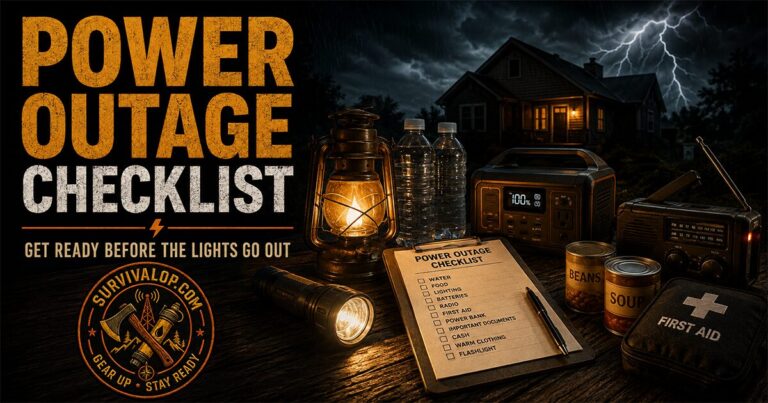
Complete the rest of the system with the power outage kit, blackout checklist and no-electricity cooking guide.
Share This Winter Blackout Guide
Help another household avoid carbon-monoxide and heating fires during a cold-weather outage.